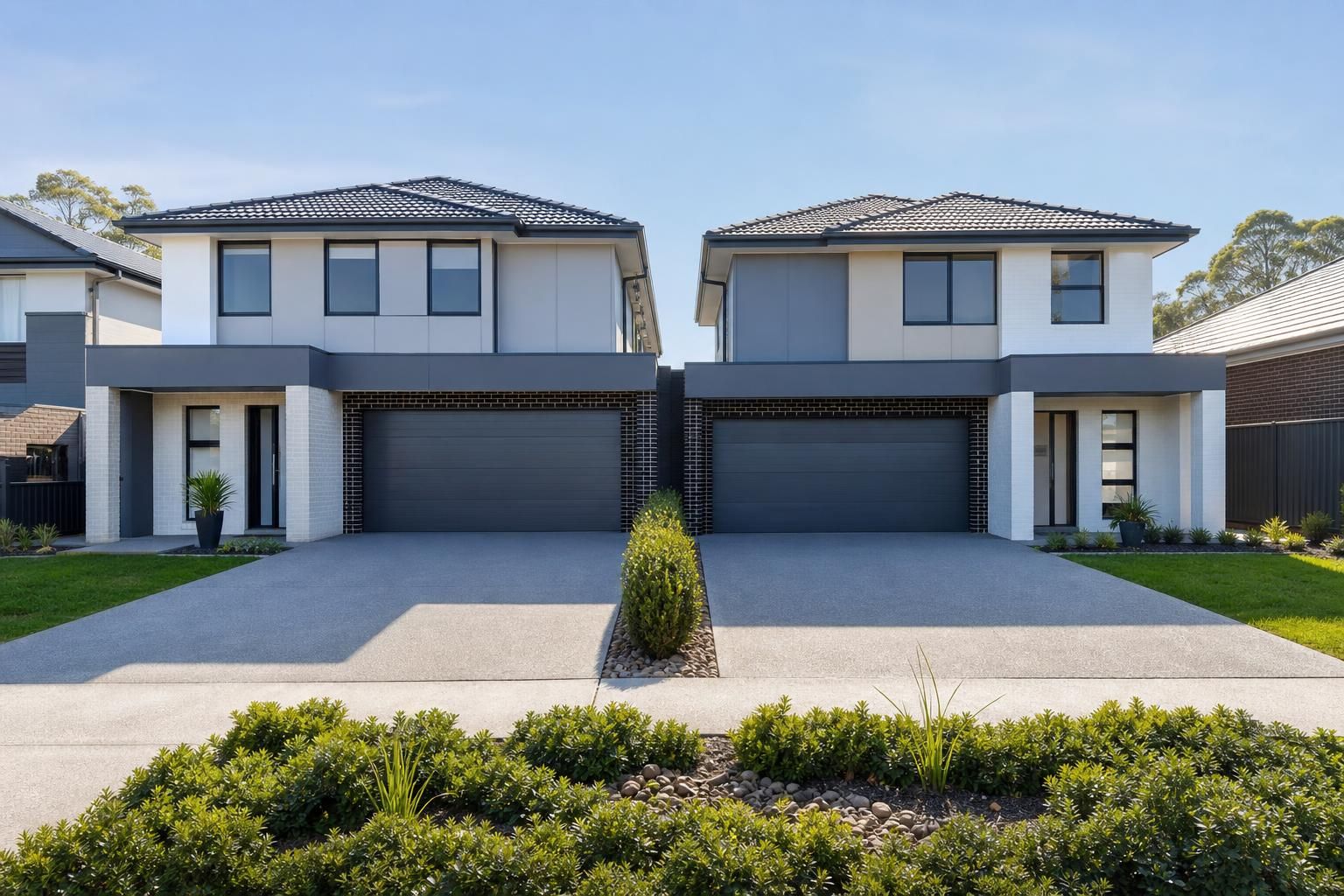
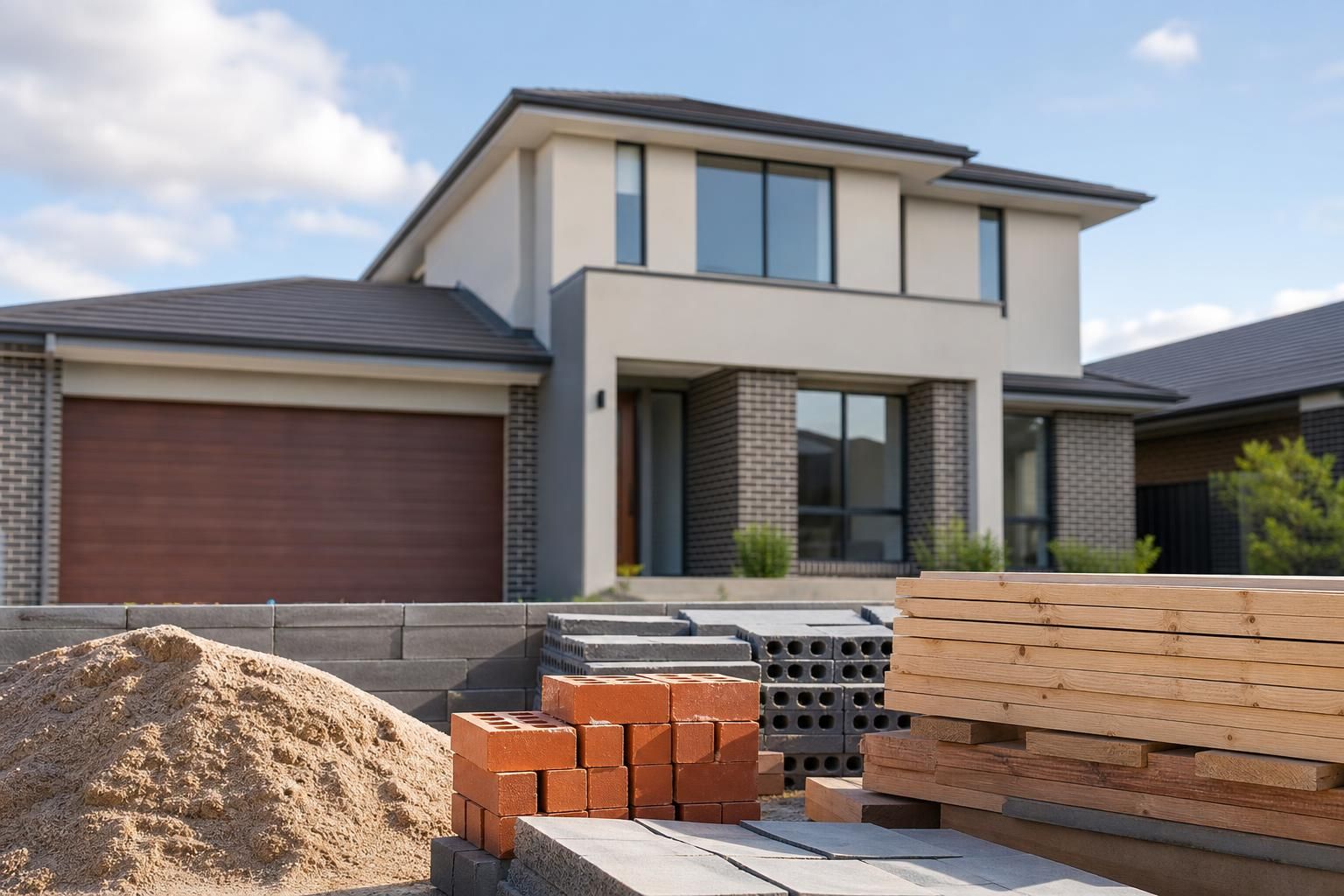
If you are searching for the best knockdown rebuild builder in Western Sydney, the honest answer is that there is no single best one. There is the right one for your block, your council, your budget and the way you want to be dealt with, and the way you find them is by asking a handful of specific questions that most people never think to ask.
This guide walks through what a knockdown rebuild actually involves in Sydney’s west, what moves the price up or down, and what separates a builder who will finish well from one who will not.
Is a knockdown rebuild the right move at all?
Three options usually sit on the table: renovate what you have, knock down and rebuild on the same block, or sell and buy something newer. They compare like this.
| Renovate | Knockdown rebuild | Sell and buy | |
|---|---|---|---|
| Keep your street, schools, neighbours | Yes | Yes | No |
| Stamp duty and agent fees | No | No | Yes, both |
| Floor plan you actually chose | Partly, limited by existing walls | Yes, from scratch | Whatever is on the market |
| Hidden surprises once work starts | High risk: wiring, stumps, termites, old plumbing | Lower: the slab and frame are new | Low, but you inherit someone else’s decisions |
| Where you live during the job | Often on site, in dust | Rent elsewhere for the build | Move once |
| Energy and thermal performance | Hard to lift much | New build meets current BASIX requirements | Depends on the home’s age |
Rebuilding tends to win when the existing house is old enough that a serious renovation would touch the roof, the wiring, the plumbing and the layout anyway. It rarely wins when the house is structurally sound and you only want a new kitchen and an extra bedroom.

DA or CDC: the approval path changes your timeline
In New South Wales a new dwelling can be approved either through a development application to council or, if it ticks every box in the state’s complying development codes, through a Complying Development Certificate issued by a private certifier or council.
A CDC is faster, often weeks rather than months, but it is pass or fail. Your block has to meet the lot width and area, setbacks, height, landscaped area and site coverage rules exactly. Plenty of older Western Sydney blocks do not. Battle-axe blocks, flood-affected land near the Hawkesbury-Nepean, bushfire prone land, heritage conservation areas and blocks with a Sydney Water main running through them will usually push you down the DA path.
The practical point for choosing a builder: ask early whether your block is realistically a CDC site, and ask them to explain why, not just assert it. A builder who knows Penrith, Liverpool, Fairfield and Camden councils will answer that quickly. You can read the current planning rules on the NSW Planning Portal.
What actually drives the cost
Beware anyone who gives you a firm figure before they have seen the site and the soil report. The things that move a Western Sydney rebuild price most are:
- Soil classification. Much of the west sits on reactive clay. A site classified H1, H2 or P under AS 2870 needs a deeper or stiffer footing system than an M site, and that difference is real money before a single wall goes up.
- Fall across the block. A flat block takes a standard slab. A sloping block brings drop edge beams, piers, steps in the floor level and retaining work by others.
- Demolition and what is in the old house. Asbestos in eaves, fibro sheeting, vinyl floor tiles and old fences all need licensed removal and disposal. Pre-1990 homes almost always have some.
- Service disconnections and reconnections. Power, water, gas, sewer and stormwater. Older streets sometimes need a new connection point rather than a reuse.
- Sydney Water assets. A sewer main or easement crossing the block can force a build-over application, a pier and beam design, or a redesign of the footprint.
- Overlays. Bushfire attack level, flood planning level, acid sulfate soils and heritage each add engineering, reports or specific materials.
- Size and specification. Two storeys cost more per square metre than one. Stone benchtops, tall ceilings, large glazing, a second living zone and a ducted system all add up quickly.
- Tree removal and driveway crossings. Council consent is often needed for both.
A builder should be able to tell you which of these apply to your block and roughly how they will be handled, and should say plainly which items are provisional until reports come back.

How to check a builder before you sign
Check the licence yourself. Every residential builder in NSW must hold a current contractor licence, and you can verify the number and any conditions through NSW Fair Trading. Look at what the licence actually authorises, not just that it exists.
Confirm Home Building Compensation Fund cover. For residential work over $20,000, the builder must give you a certificate of insurance under the Home Building Compensation scheme before taking any money or starting work. No certificate, no deposit.
Understand the statutory warranty. In NSW, new residential work carries a six year warranty for major defects and two years for everything else, from completion. That is the law, not a favour.
Read the contract, not the brochure. Look for the progress payment schedule, how variations are priced and approved in writing, what the provisional sums cover, the allowance for delays, and what happens if the soil report comes back worse than assumed.
Ask to see work in progress, not just finished photos. A tidy, well-organised site mid-build tells you more than a styled photo. Look at frame straightness, brick coursing, the way flashings are detailed, whether waterproofing is done properly before tiling, and whether rubbish is contained.
Ask who runs your job. The name on the tender is often not the person you will deal with. Ask who the site supervisor is, how many jobs they run at once, and how often you will hear from them.
What good and bad work look like
Good work shows up in the boring parts. Straight, plumb frames with no packing gymnastics. Waterproofing membranes in wet areas installed and inspected before anyone tiles. Articulation joints where the engineer asked for them. Roof and wall flashings that direct water out, not into the cavity. Stormwater actually connected to the legal point of discharge. Window reveals square. Doors that close in summer and winter.
Bad work shows up as excuses about “settlement” for cracks that appear in the first year, tiles drummy underfoot, silicone used to hide gaps that should have been cut properly, and a defects list at handover that keeps getting longer because nobody closed items out as they went.
A realistic timeline
For a straightforward single dwelling rebuild in Western Sydney, expect design and documentation to take a couple of months, approval anywhere from a few weeks under a CDC to several months for a DA with referrals, demolition and site preparation a few weeks, and construction commonly somewhere between nine and fourteen months depending on size, weather and trade availability. Duplex and dual occupancy builds run longer. Anyone promising a much faster program should be asked exactly which stage they intend to compress.
Questions worth asking on the first site visit
- Looking at this block, is it CDC or DA, and why?
- What is your assumption on soil classification until we get the report, and what happens to the price if it comes back worse?
- Who is my site supervisor and how many other jobs will they be running?
- How are variations priced and approved?
- Can I see a job of yours currently at lock-up stage?
- What is your defects process at handover, and who fixes what during the warranty period?
Where we fit
Home Cor Constructions is one builder to consider for a Western Sydney knockdown rebuild. We are based in Wetherill Park, hold NSW builder licence 328873C, and our director Anthony Chohaili has been building in Sydney for more than 25 years. We handle custom homes, duplex and dual occupancy builds, townhouses and granny flats across Greater Sydney, with recent work through Penrith, Liverpool and Spring Farm, and we also build in Newcastle and Wollongong. If you want a straight answer about whether your block suits a rebuild and what path it would take, that is a conversation worth having before you commit to anything.
FAQ
Can I stay in the house while it is being rebuilt?
No. Once demolition starts the site is a construction site and the power, water and gas are disconnected. Budget for rent or other accommodation for the full build period, plus a buffer, and factor that into what you can afford to spend on the house itself.
Do I need to sell the block or subdivide to build a duplex?
Not to build one. A dual occupancy can be built and kept in one ownership. Subdividing into two separate titles is a separate approval with its own requirements around lot size, frontage and services, and it is worth deciding up front because it affects the design, the fire separation between dwellings and the service connections.
What happens to the old house’s slab and footings?
They come out as part of demolition and site preparation. Leaving old footings under a new slab causes differential movement and cracking. Make sure the scope you are quoting clearly states that existing slabs, footings, old pools and buried rubble are removed, because leftovers underground are a common source of variations.